
Coming home after a fire is one of the hardest moments a family can go through. The space in front of you doesn’t look like the home you knew, and it’s completely normal to feel overwhelmed or unsure where to start.
For items that may be safe to save, quick and careful action can help protect what’s left, and knowing how to store your belongings safely after a house fire can make a meaningful difference in what you get to keep.
Use these steps to stay safe, document damage, sort salvageable items and move belongings into secure temporary storage.
Your safety comes first, so wait for local fire officials to give you the all-clear before going back inside your home. Move through the space carefully, as structural damage, weakened floors and hidden hazards can still be present.
Wear protective gear, including an N95 mask, long sleeves, gloves and heavy-soled shoes to protect your lungs and skin. Keep clear of anything that looks damaged, rather than leaning on or pushing on it, and stay off any floors that feel soft or sag underfoot.
It’s best to stay out of your home if you notice water pooling around it, downed or dangling power lines, hissing noises and the smell of gas. These conditions can cause electric shocks and fires, injuring you before you reach your belongings.
Walk through your home, room by room, and video-record everything. This helps protect your insurance claim and creates a clear record of what you lost, as well as soot and smoke damage on walls, floors and larger items. The Red Cross recommends saving receipts for fire losses and waiting until your insurance agent has completed an inventory before you get rid of anything.
Not everything from your home will make it through a fire, and knowing the difference is important. The longer soot sits on an item, the harder it becomes to remove, so acting fast gives your salvageable belongings a much better chance.
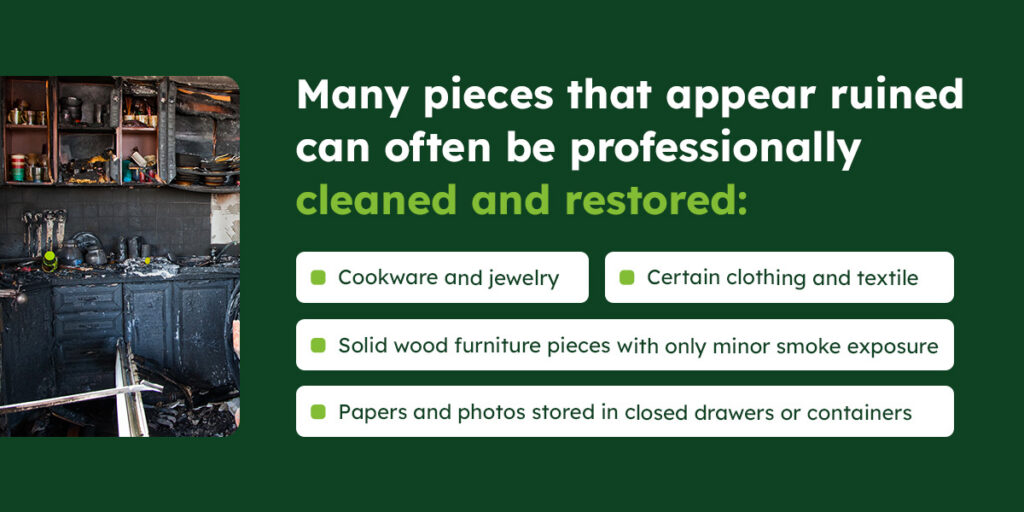
Nonporous items tend to hold up best after a fire since they don’t absorb smoke and soot as readily as softer materials. Many pieces that appear ruined can often be professionally cleaned and restored:
Some categories are almost always unsafe to keep after a fire, so letting them go makes it easier to focus on what you can save.
Suit up before you touch anything. FEMA recommends wearing nitrile or latex gloves, as bare hands can set soot stains into fabric and other surfaces. For breathing protection, grab an N95 or P100 respirator to filter out fine soot particles. Surgical and cloth masks typically let those particles slip right through.
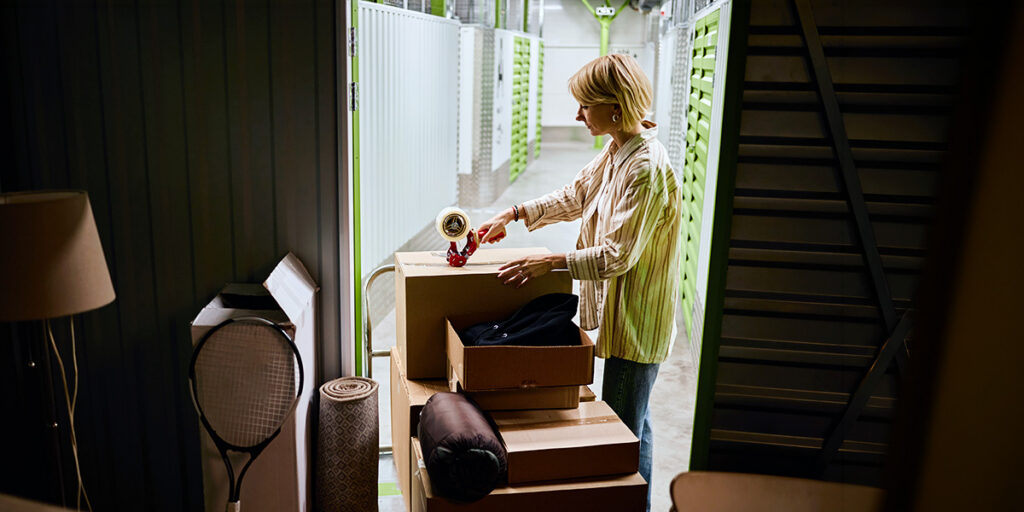
Once you’re geared up, reach for sturdy, clean containers instead of trash bags, which trap moisture and odors that can make damage worse over time. Label each box with its contents and the room it came from to ease unpacking later.
Pack fragile items separately from heavier ones so nothing gets crushed in transit, and leave any smoke-exposed electronics unplugged, since soot is corrosive to internal components and powering a device back on can cause permanent damage. Keep a detailed list of everything you have in storage. This will be helpful for both your insurance claim and for your own records.
Fire restoration can drag on for weeks or months, and every day your packed items sit inside the house, they’re exposed to more soot and smoke residue kicked up by the cleanup work. Storing salvaged belongings in a secure and portable storage container while repairs are underway can give you the peace of mind needed to focus your attention toward those restoration efforts.
Pro Box can deliver it directly to your property, so your undamaged and salvageable belongings go straight from the house into a sealed space built to keep dust, debris and prying eyes out. You won’t have to haul anything to a facility or deal with logistics during an already overwhelming time. Storing belongings during fire restoration this way keeps everything easily within reach during the restoration and ready to move back in when you’re able.
You’ve done the hard work of saving what you can. Now, let Pro Box Portable Storage help with the storage piece. We can deliver a wind- and watertight (WWT) container to your property in two to three days. It’s protected by our patented Pro Vault Locking System®, and you can choose from 10’, 15’, 20’, 25’ and 40’ sizes.
Your rate stays locked in for as long as you need the space to store your belongings safely. You’ve been through enough already. Let us take one more thing off your plate. We have just a single point of contact for ordering, pricing, trucking, billing and customer service.
Call 844-277-6268 or request your free quote to get started.

Our website uses cookies in order to offer you the most relevant information and to analyze our web traffic. Please accept or learn more about our privacy policy.